Hard work isn't the same as the right work.
You've already invested. Club fees, private sessions, camps, a shooting coach, the hotel rooms. Your child works. And after a bad weekend, you still don't know what to fix or who to ask.
Every coach sees a piece of the player. The club coach sees the games. The trainer sees the workouts. Nobody sees the whole picture, and nobody is responsible for it.
That's the gap. Not talent. Not effort. A plan, and one person accountable for it.
I don't just train players. I build them from the ground up, with a plan.
It's the same approach that took my own son to Division I basketball at Texas A&M, and the same one behind back-to-back state championships when I was a varsity head coach.
The Player Gap PRIVATE is that approach applied to one player for a full year, with me personally responsible for the plan. I study the games, I set the next ninety days, I tell you the truth about what's working, and I help you make the big decisions when they come.
I take six families. Not because six sounds exclusive. Because six is what I can do at this standard while still coaching the way I coach.
The Green File
Everything we learn about your child, in one confidential record you can open at ten o'clock at night after a bad game.
Where the player is now. The one barrier holding them back. The next ninety days. What has carried into games and what hasn't. My notes to you as a parent. It's updated all year, because the player changes all year.
The Game Transfer Standard
Every ninety days, the same five steps. The work inside them changes with the player.
Clearing
What's in the way? The habits, decisions, and training patterns holding the player back. We name them first.
Foundation
Build the skill and the movement that close that gap, until they're reliable without thinking.
Framing
Put it under pressure. Defenders, timing, real reads. A move that only works in an empty gym isn't a move yet.
Conditioning
Make it hold up at game speed, late in the game, when the player is tired and the other team has figured them out.
Transfer
Watch the games. Did it show up? The film decides whether we move on, not the number of workouts.
A player moves on when the evidence says they're ready, not when the package of sessions runs out.
A player nails a move in training but keeps making the wrong read against help defense. Another hundred reps of the move won't fix that. Changing the decisions he faces will. So that's what the next ninety days are built around.
What your family receives
Eleven commitments, in writing, over twelve months. Here is every one of them.
A full assessment, a parent consultation, a full-game film review, and a written year-one plan.
My six-month development program, built into the year instead of sold on its own.
All five levels of off-the-dribble separation and decision-making, scheduled as the player's needs and cohorts allow.
Twelve, individually directed. Six with me, six with my assistant coach, Marcus Goss, running the plan I wrote.
Twelve monthly reviews of your child's actual games, whoever they play for.
Two local games I attend in person, with notes to you afterward.
One private thirty-minute call with me each month. Playing time, the coach, the schedule, what's next.
Four meetings a year with parent and player in the room. We review the evidence and set the next ninety days.
Up to two written recommendations each quarter on the big calls. Play up or stay. Change teams or don't. When to rest.
The living record of all of it, kept current and available to your family.
Where we started, what moved, what's left, and the plan for next year.
The big calls, in writing, with my reasons and what would change my mind.
You don't need more opinions. You need one clear recommendation you can hold me to. Every note has the same four parts, and every one goes in the Green File.
Right now the advantage is speed, not reads. At 16U the speed edge shrinks and the reads get exposed. The clips are in the Green File.
Two consecutive game reviews with correct reads against help defense at the current level.
Framing and Conditioning work on reads against help. Revisit at the spring Development Board.
Four ninety-day cycles. One player.
This isn't a curriculum where every player does the same thing in March. Each cycle is built from what the last one showed us.
Understand the player. Find the real gap. Set the baseline.
Put the skill under resistance. Adjust. See what shows up in games.
New barriers. Role and competition demands. Keep transferring.
Make it independent. Measure it. Set the next horizon.
Every month, without exception: court work, game film, a conversation with you, and an update to the file.
—Your child already trains and competes, and wants this for themselves.
—You're spending real money across several people and nobody is accountable for the result.
—You want honest answers, including the ones you'd rather not hear.
—You'd rather have one trusted voice than five opinions after every tournament.
—You're looking for a guaranteed roster spot or a scholarship. Nobody honest can sell you that.
—You want a quick fix before tryouts.
—Your child is doing this because you want it more than they do.
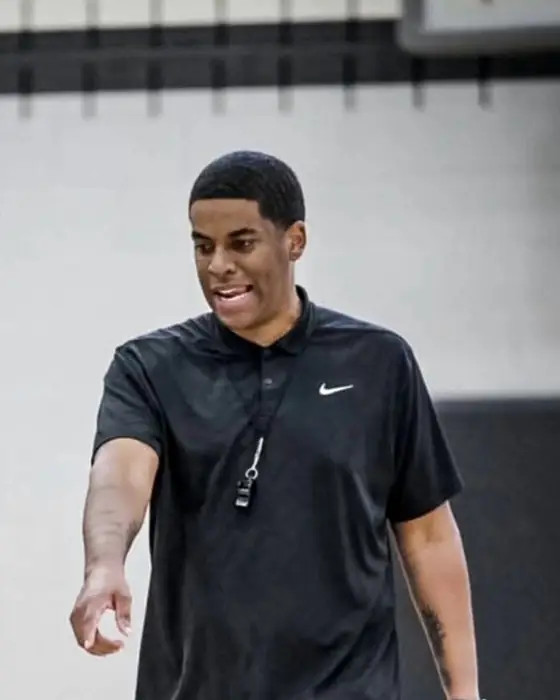
Lee Green
I've coached at the club and varsity level, including back-to-back state championships as a varsity head coach. I founded Lee Green Basketball Academy in Denton, built the Drop Lab and Player Gap programs, and direct Cy Fair Elite NTX, a Nike-affiliated travel program. I also build the tools we measure with, including an automated shot-tracking system.
The thing I'm proudest of isn't on that list. My son earned a Division I spot at Texas A&M on the same plan I'm offering your family. I've sat where you're sitting. I know what the bad weekends feel like, and I know what it takes to get through them with the plan intact.
In their words.
Public reviews and messages from LGBA families. Unedited except for length.
"Coach Green is the reason she got a full ride. He was demanding. He was tough. He filled her with hard won confidence. He set a high bar and improved her entire game."
"From our very first skills session with him, we knew we were in the right place. Coach Green knows basketball. His tips and drills are innovative and productive and he takes the time to show how each drill relates to real game play."
"She feels she has gotten much more comfortable with her ball handling skills. She also said with doing the game film study she is able to make the connection better on when she learns certain basketball moves and when she would use that in a game situation."
"The basketball coach told her this morning she was getting a schedule change from freshman basketball into the JV/varsity period. I want to thank you for all the help you have given to her, not only in basketball but life as well."
"I really appreciate you being so detailed with the proper mechanics. Just the simple adjustments allow him better separation."
One year. One decision.
Add up what you're already spending in a year on a club, a trainer, camps, and travel with no one in charge. Then ask what one year with a plan is worth.
Before you decide, you'll read a written twelve-month agreement: every service above, the scheduling rules, payment and cancellation terms, and what I ask of your family. Nothing on this page is a promise that isn't in writing there.
Already in The Player Gap or Drop Lab? I'll write you a transition proposal that credits what you've paid. You won't pay twice for the same work.
"By far the best program around and the best investment to our son's future."
Straight answers.
Do we have to join your club team?
No. Club membership is a separate decision. PRIVATE works alongside whatever team your child plays for. If a change of teams is the right call, you'll hear it from me in writing, with the reasons.
How much of this is actually you?
Six of the twelve court sessions. Both live games. Every parent call, every Development Board, every Decision Desk note, and every entry in the Green File. The other six are run by Marcus Goss, my assistant coach, on the plan I wrote.
What do you guarantee?
The eleven commitments above, in writing. Not playing time, not a roster spot, not a scholarship. I won't promise what I don't control.
What does access look like?
Predictable. Monthly calls are scheduled. Quarterly boards are protected on the calendar. A written question gets a written answer within two business days. You'll always know when you have my attention, and you'll always get it.
Is my child ready for this?
If they already train and compete and they want this for themselves, probably. The Opening Intensive tells us for sure. If a different LGBA program is the better fit, I'll say so.
Why only six families?
Because the work above takes real hours, and I still coach. Six is what I can do at this standard. When the six are filled, the next opening is the following year.
It starts with a conversation, not a checkout.
No shopping cart. No countdown timer. Acceptance is based on fit, seriousness, the player's own commitment, and whether a spot is open.
Reach out
Call, text, or email me. Tell me who your child is and what's been frustrating you.
A short application
Where the player is now, what's been tried, what a good year looks like, and how committed your family is. It takes five minutes.
A private conversation
We talk. I decide whether I can responsibly deliver what your child needs, and you hear the full terms before anything is signed.
Written acceptance
A personal letter, the agreement, scheduling details, and a date for the Opening Intensive.
The application takes five minutes and I read every one myself. Not sure yet? The Snapshot takes two and shows where your family stands.